Blueprint Monday | Vol. 20
One Client. Two Luxury Transactions. Two Completely Different Strategies.
How Strategic Real Estate Representation Protects Value for Sellers and Buyers
What does strategic real estate representation actually look like?
Sometimes the clearest answer comes from representing the same client on opposite sides of two luxury transactions.
Recently, I had that opportunity in the Farmington Valley.
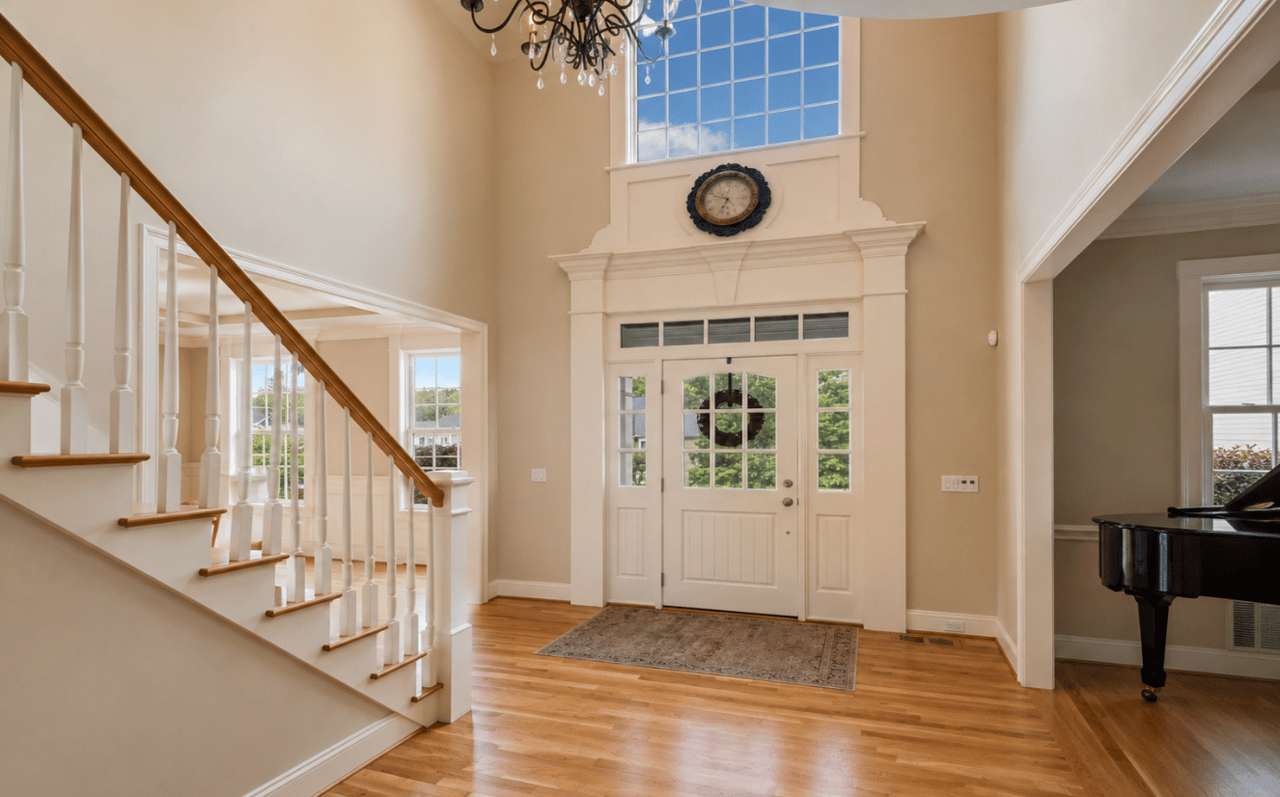
First, I represented my client as the seller of 59 Lord Davis Lane in Avon, Connecticut.
Then, I represented him as the buyer of 79 Highridge Road in West Simsbury, Connecticut.
Two exceptional properties. Two very different objectives.
One responsibility: protect my client’s financial position.
As a Hartford County luxury real estate advisor, I approach every transaction through the same lens: understand the value, identify the leverage, and build the strategy around my client’s financial objective.
What Does Strategic Real Estate Representation Mean?
Strategic representation means understanding a property’s market value, recognizing where leverage exists, and using preparation, positioning, market knowledge, timing, marketing, and negotiation to advance a client’s financial interests.
For a seller, that means creating and protecting value.
For a buyer, it means recognizing opportunity and understanding when the market price may not fully reflect the property’s underlying value.
These two transactions demonstrate both.
Seller Representation: 59 Lord Davis Lane, Avon
When I represented the seller of 59 Lord Davis Lane, my responsibility was to maximize and protect my seller’s equity.
The property was listed at $2.5 million and sold for $2.6 million.
Importantly, we did not need a multiple-offer bidding war to achieve that result.
In luxury real estate, maximizing value is not simply about generating more offers. It is about preparation, presentation, pricing, marketing, buyer perception, and knowing how to negotiate from a position of strength.
My strategy was to position the property so the right buyer understood its value and then protect that value through negotiation.
Listed at $2.5M. Sold at $2.6M.
At Lord Davis, my job was to make sure the market recognized the value.
Buyer Representation: 79 Highridge Road, West Simsbury
When that same client became a buyer, my responsibility changed.
Now my job was to recognize value.
79 Highridge Road had originally been offered at $1.925 million.
After approximately a month on the market without a sale, the property was repositioned at $1.750 million.
I saw an opportunity.
My client ultimately purchased the home for $1.775 million.
The independent appraisal came back at $1.975 million.
That is a $200,000 difference between the purchase price and appraised value.
My client paid $25,000 above the revised asking price, yet acquired the property for $200,000 below its appraised value.
That is why successful buyer negotiation cannot be measured simply by whether a home was purchased below asking.
Buying Below Asking Does Not Automatically Mean You Got a Good Deal
A property purchased below asking can still be overpriced.
A property purchased above asking can still represent exceptional value.
The more important question is:
What is the property actually worth, and what terms can I negotiate for my client relative to that value?
At Highridge, the objective was not simply to negotiate against the asking price.
It was to understand the property, recognize the leverage, and secure an exceptional home at a price that served my client’s financial interests.
At Highridge, my job was to recognize value the market had not fully captured.
Luxury Real Estate Requires More Than Price Per Square Foot
Luxury homes are rarely interchangeable.
Architecture, acreage, privacy, quality of construction, renovations, amenities, landscaping, condition, location, competing inventory, and buyer demand all influence value.
That is why luxury real estate requires more than a basic comparable-sales analysis.
It requires judgment.
It requires understanding not only what a property is priced at, but why.
One Client. Two Responsibilities.
At 59 Lord Davis Lane, I was protecting my seller’s equity.
At 79 Highridge Road, I was protecting my buyer’s capital.
Different sides of the transaction require different strategies, but my responsibility remains the same:
Understand the value. Recognize the leverage. Negotiate in my client’s best financial interest.
For sellers, strategic representation means knowing how to prepare, price, position, market, and negotiate a property to maximize its potential.
For buyers, it means recognizing opportunity, understanding true market value, and knowing when and how to negotiate.
My job is not simply to facilitate a real estate transaction.
It is to create and protect leverage for the client I represent.
For buyers and sellers considering luxury real estate in Avon, Simsbury, West Simsbury, West Hartford, Farmington, Canton, Burlington, the Farmington Valley, and throughout Hartford County, experience matters most when it translates into better decisions and stronger financial outcomes.
Frequently Asked Questions
What does a strategic listing agent do for a seller?
A strategic listing agent coordinates preparation, pricing, presentation, positioning, marketing, buyer psychology, and negotiation to strengthen the property’s market position and maximize its potential.
What makes a strong buyer’s agent and negotiator?
Strong buyer representation requires understanding market value, comparable sales, property condition, seller motivation, competition, timing, and where leverage exists.
Is buying below asking price always a good deal?
No. Purchase price must be evaluated relative to market value. A buyer can pay above asking and still acquire a property at an excellent value.
Why is luxury real estate negotiation different?
Luxury properties are less standardized. Architecture, land, amenities, renovations, privacy, condition, and location can make traditional comparisons less reliable, which makes experienced valuation and negotiation especially important.
Laurie Kane’s Seller Blueprint
Preparation Creates Leverage.
Strategy Creates Opportunity.
Sell for More. Not Just Faster.